Tuesday, September 11, 2007

Ella at Mr Kelly's


On this mournful day, on which legendary jazz keyboard player Joe Zawinul passed away, there is finally word from the Verve Music Group about the 2-disc set "Ella Fitzgerald at Mr Kelly's"!
It seems probable that it will be released on September 18, 2007, and the above is a preview of its cover! Pretty neat, don't you think... although I would've preferred something painting-like, such as the Ella-returns-to-Berlin-cover. The picture on this cover seems to be of around 1962 (she's wearing a wig), and this concert dates from 1958 (in which she looked better in my opinion, without the wig).
Just imagine that within two weeks we can finally listen to these great recordings of Ella in her prime... but in all this joy, let's not forget Joe Zawinul.

Saturday, June 02, 2007

Ella at Mr Kelly's


Scheduled for release on June 6, 2007
- subject to change, and regrettably too late for some of us:

Ella Fitzgerald: Live at Mr Kelly's
Ella Fitzgerald (vc), Lou Levy (p), Max Bennett (b), Gus Johnson (d)
August 10, 1958

Disc 1
1. Your Red Wagon
2. Nice Work If You Can Get It
3. I'm Glad There Is You
4. How Long Has This Been Going On?
5. Across The Alley From The Alamo
6. Perdido
7. The Lady Is A Tramp
8. Bewitched
9. Summertime
10. In The Wee Small Hours Of The Morning
11. St. Louis Blues
12. Witchcraft
13. Love Me Or Leave Me
14. Joe Williams' Blues
15. Porgy And Bess Medley: I Loves You Porgy / Porgy, I's Your Woman (Bess, You Is My Woman Now)
16. How High The Moon

Disc 2
1. Introductions
2. Exactly Like You
3. Come Rain Or Come Shine
4. Stardust
5. 'S Wonderful
6. You Don't Know What Love Is
7. Witchcraft
8. Perdido
9. In The Wee Small Hours Of The Morning
10. My Funny Valentine
11. Anything Goes

This seems a 2CD-box, though it's advertised as a 1CD on most websites.
Even as a 2CD-set, some tracks of the actual concert have not made it to this upcoming release (Oop Bop Sha Bam, Too Close for Comfort et cetera), plus the track's order is different than expected, no doubt due to flaws in the master tapes, which have spent the past 50 years on a shelve.

And, it has happened before that on the day of the scheduled release, record company Verve withdrew from its promise and did not release anything at all. Let's keep our fingers crossed!
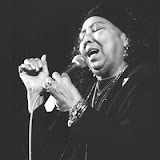
Thursday, April 19, 2007

Nancy Wilson's 70th birthday party at NYC jazz festival

"This year, you can count on two weeks of outstanding music featuring some of the best of traditional, straight-ahead, contemporary, Big Band, Second Line, R&B, Latin, world music and more"

A belated swinging 70th birthday party with an all-star guest list is planned for pop-jazz songstress Nancy Wilson at this year's JVC Jazz Festival.

Wilson, who turned 70 on Feb. 20, won her third Grammy earlier this year in the category of Best Jazz Vocal Album for 'Turned to Blue,' an album drawing on her experiences in a five-decade career as an entertainer.

At the June 29 Carnegie Hall concert, Wilson and her trio will be joined by special guests, including jazz vocalists Nnenna Freelon, Dianne Reeves and Kurt Elling; pianists Herbie Hancock and Ramsey Lewis; and violinist Regina Carter. Read more

Wednesday, April 18, 2007

Gladys Knight To Receive ELLA Award

LOS ANGELES, Apr. 17, 2007
 (AP)


(AP) Gladys Knight will receive the 16th annual ELLA Award from the Society of Singers. The honor, named after its first recipient, jazz legend Ella Fitzgerald, salutes entertainers for their musical successes and dedication to charitable and humanitarian causes.

"It is a truly awesome feeling to be receiving this honor. Ella was the sweetest and most beautiful person as a talent and as a human being," Knight said Tuesday.

Knight will receive the award Sept. 10. Past winners include Elton John, Frank Sinatra and Celine Dion.

"Gladys Knight has one of the greatest and most distinctive voices of our time," said Jerry F. Sharell, the Society of Singers' president and chief executive officer. (The Los Angeles-based nonprofit organization offers services to meet the emergency financial needs of professional singers worldwide.)

Knight, 62, has won seven Grammys in her career, with hits including "Midnight Train to Georgia" and "Neither One of Us (Wants to Be the First to Say Goodbye)."

Monday, April 16, 2007

Dianne Reeves at the Gem: Celebrating Her 'Good Luck'

Sunday, April 15, 2007

3/21/07 - NY Daily News - Hank Jones & Abbey Lincoln (Both Hospitalized)

Dr. Sandhya Balaram (standing far l.) and Dr. Daniel Swistel, both heart surgeons at St. Luke's Hospital, join their recovering patients Abbey Lincoln Moseka and Hank Jones.


3/21/07 - NY Daily News - Hank Jones & Abbey Lincoln (Both Hospitalized)


Subject: Hank Jones & Abbey Lincoln
 Date: Fri, 23 Mar 2007 08:29:07 -0700
Finding harmony together
The unexpected reunion of two New York jazz legends
BY JULIAN KESNER / Daily News

Posted Monday, March 19th 2007, 12:26 AM

Dr. Sandhya Balaram (standing far l.) and Dr. Daniel Swistel, both heart surgeons at St. Luke's Hospital, join their recovering patients Abbey Lincoln Moseka and Hank Jones.

--------------------------------------------------------------------------------

The jazz pianist and jazz singer sat side by side talking softly and exchanging memories. It had been 10 years since they last saw each other, and 15 since they recorded a full-length album together. Occasionally, the singer would break into song, and the pianist would pick up the tune and sing along.


But there was no piano present, nor a recording studio. The only background music was the beeping of a heart monitor machine, and air moving through an artificial respirator down the hall. Their managers and producers were nowhere to be seen - only doctors and nurses, who from afar kept an eye on the pair and the reporter sitting beside them.

It was an unlikely reunion in the most unlikely of places for Hank Jones and Abbey Lincoln Moseka, two jazz legends whose paths crossed again last Tuesday at St. Luke's Hospital.


Jones, 88, has been playing the piano for over 60 years. He recorded with
Charlie Parker and Ella Fitzgerald, among others, and played for "The Ed
Sullivan Show" for many years.


The 77-year-old Lincoln Moseka grew up in Chicago as Anna Marie Wooldridge (a former manager gave her the stage name Abbey Lincoln). She came to New York in her 20s and sang at the Village Vanguard, later marrying jazz and bebop composer Max Roach (they divorced in the 1960s) and starring in several films.


Producer Jean-Philippe Allard jump-started Lincoln Moseka's career in the
early 1990s, culminating with the 1992 album "When There Is Love" - recorded with none other than jazz pianist Hank Jones over three or four days. The duo have also performed on tracks for other albums.


Jones came to New York City in February after a few months in Japan, where he performed "a few concerts in Kobe" and spent time relaxing. Two weeks after arriving here, the problems began.

"It felt like indigestion," he recalled last Tuesday, seated in Lincoln Moseka's hospital room at St. Luke's, wrapped in a thick bathrobe. "I didn't feel any pain."

In reality, Jones had suffered a massive heart attack. St. Luke's cardiothoracic surgeon Dr. Sandhya Balaram performed bypass surgery on Jones on Feb. 28, and he's recovering well.


"He said the only thing wrong with his room was there was no piano," said Balaram.


Lincoln Moseka was rushed to St. Luke's on March 3, not breathing and
suffering heart failure and pulmonary edema (during which the lungs fill
with fluid). St. Luke's cardiothoracic surgery chief, Dr. Daniel Swistel
performed aortic valve replacement and bypass surgery and Lincoln Moseka has been in the ICU since.

"Her recuperation will be a bit slower. She's got more to recover," said Swistel.


Jones and Lincoln Moseka had no idea they were in the same hospital at the same time, but while Googling their respective album histories, Balaram and Swistel realized their patients' connection and arranged for the reunion.


Jones is expected to be at St. Luke's a couple more weeks, continuing physical therapy after being discharged. Lincoln Moseka's recovery is more unsure; she may still be in the hospital when her new album, "Abbey Sings Abbey," is released later this year.

Regardless, within minutes of seeing each other again, Jones, Lincoln Moseka and their healing hearts seemed to relax.


"Old friends should never get separated. A lot of years have gone by," said
Jones, adding to Lincoln Moseka, "We should record together!"

"He always makes me feel special,"said Lincoln  Moseka, visibly weak but
 smiling nonetheless. "It's wonderful to see him."

Friday, April 13, 2007

Jazz Vocalist Dakota Staton, 76, Dies


by Nate Guidry
Pittsburgh Post-Gazette, April 12, 2007

Dakota Staton, an iconic Pittsburgh jazz vocalist who achieved international fame, died Tuesday at Isabella Geriatric Center in New York after a lengthy illness. Ms. Staton was 76.

Sharynn Harper, a spokesperson for Ms. Staton's brother, Fred Staton, said Ms. Staton had been in declining health after suffering a triple aneurysm several years ago.

Ms. Staton's last major performance in Pittsburgh was in 1996 when she performed at the Hill House Auditorium as part of the Mellon Jazz Festival.

Born and raised in Homewood, Ms. Staton attended Westinghouse High School and was a member of the famed Kadets, a swing band that played music ranging from "String of Pearls" to Coleman Hawkins' "Body and Soul."

After cutting her teeth working with the Joe Westry Orchestra at several of the bigger nightclubs in the Hill District, Ms. Staton moved to Detroit in search of other musical opportunities.

In 1954, Ms. Staton recorded a single for Capitol Records and began a series of highly visible concerts on the East Coast. Two years later, she was named "the most promising jazz vocalist of the year" by the critics at Downbeat Magazine. When her first album, "Late Late Show," appeared the following year, it was hailed a classic.

In the mid 1960s, Ms. Staton moved to England.

"From England I ventured all around the world," Ms. Staton told the Post-Gazette in a 1996 interview. "Most of the venues I played there were for international audiences that spoke and understood English, like the Intercontinental hotel chains and other places I worked. Many of those people had never heard the blues, and I was an oasis for them. I imagine some of them have never heard it since."

Thursday, April 12, 2007

Dave Brubeck in Durham, CT

May 19, 2007 at Coginchaug Regional High School, Durham, CT, jazz legend Dave Brubeck celebrates the birth of a new children's charity - Jazz'd 4 Life, with hosts Dr. Mel from News Channel 8 and actor, author, producer, Chris Lemmon. Jazz'd4Life reaches children from our backyards in Connecticut's inner cities to our most impoverished neighbors around the world. This concert's proceeds supports Connecticut's AmeriCares, New Haven and Middlefield's Camp Farnam, as well as the B.E.M. School in Les Cayes, Haiti. Event festivities kick off Saturday evening with the Jazz'd4 Life Inaugural Fund-raising Concert with Mr. Dave Brubeck Following the concert, will be a VIP Reception including full dinner, drinks and a celebrity jam at the picturesque Lyman Homestead. This will be an evening of great food, fun and music in an intimate setting, with the performers and other special guests.

Dave Brubeck in Durham, CT


May 19, 2007 at Coginchaug Regional High School, Durham, CT, jazz legend Dave Brubeck celebrates the birth of a new children's charity - Jazz'd 4 Life, with hosts Dr. Mel from News Channel 8 and actor, author, producer, Chris Lemmon. Jazz'd4Life reaches children from our backyards in Connecticut's inner cities to our most impoverished neighbors around the world. This concert's proceeds supports Connecticut's AmeriCares, New Haven and Middlefield's Camp Farnam, as well as the B.E.M. School in Les Cayes, Haiti.

Event festivities kick off Saturday evening with the Jazz'd4 Life Inaugural Fund-raising Concert with Mr. Dave Brubeck Following the concert, will be a VIP Reception including full dinner, drinks and a celebrity jam at the picturesque Lyman Homestead. This will be an evening of great food, fun and music in an intimate setting, with the performers and other special guests.

Tuesday, March 20, 2007

Annie Ross at the Metropolitan Room Tuesday, March 20th at 7:00 PM


Jazz legend Annie Ross continues her run of Tuesday's at the
Metropolitan Room
At Gotham
New York's newest and best music room
34 West 22nd St. (between 5th & 6th Ave.)
New York City
Reservations (212)206-0440
http://www.metropolitanroom.com/


March 20th @ 7:00 PM
Continuing Every Tuesday in March and April


    Tardo Hammer – Piano

  • Neal Miner – Bass

  • Jimmy Wormworth – Drums

  • Warren Vaché - Trumpet (when in town)


Read the Recent features about Annie Ross

The Voice of Experience, but a Frisky Approach By STEPHEN HOLDEN
http://www.nytimes.com/2007/03/16/arts/music/16ross.html?_r=1&oref=slogin

by Zan Stewart in the Newark Star Ledger

At 73, Annie Ross is still going strong
http://www.nj.com/starledger/stories/index.ssf?/base/entertainment-1/1170309407216780.xml&coll=1

And Will Friedwald
Life Is a Song for Annie Ross
http://www.nysun.com/article/49397


www.annieross.net


For Interviews, Photos and CDs Contact:
Jim Eigo Jazz Promo Services T: 845-986-1677 E-Mail: jazzpromo@earthlink.net


The Very Best of the Rodgers and Hart Song Book

 
Track Listings
1. Lover
2. My Funny Valentine
3. I Didn't Know What Time It Was
4. It Never Entered My Mind
5. Ten Cents A Dance
6. Lady Is A Tramp
7. Manhattan
8. Little Girl Blue
9. I Could Write A Book
10. Where Or When
11. This Can't Be Love
12. Bewitched Bothered And Bewildered

Sunday, March 18, 2007

forgot these


Posted by Picasa

Ella recording Rhythm is My Business


Posted by Picasa

Back covers of the original 5LP of the Gershwin Songbook


Posted by Picasa

Ella and Nelson Riddle recording the Gershwin Songbook

 
Posted by Picasa

Ella, recording "Rhythm is My Business"


Posted by Picasa

Friday, March 16, 2007

Lafayette Harris Upcoming Appearance with Ernestine Anderson at Dizzy's Wed-Sun, Mar 28-Apr 1


Pianist Lafayette Harris is pleased to announce his appearance with vocal legend Ernestine Anderson
Wed-Sun, Mar 28-Apr 1

"Sing Into Spring Festival"
Ernestine Anderson & Houston Person
 
Featuring Ernestine Anderson, vocals; Houston Person, tenor saxophone;
Lafayette Harris, piano; Chip Jackson, bass; Willie Jones III, drums.
at
Dizzy's Club Coca-Cola
Frederick P. Rose Hall
Jazz at Lincoln Center Broadway at 60th Street
5th Floor
Reservations
Call: 212 258-9595
http://www.jalc.org/


Lafayette is featured on Ernestine  CD LOVE MAKES THE CHANGES on High Note.

Lafayette Harris Can Also Be Heard On His Latest CD


In The Middle Of The Night
AR 008
Street date May 1, 2007


IN THE MIDDLE OF THE NIGHT is Lafayette's first funk and Contemporary jazz disc.
 
A Baltimore native, LAFAYETTE HARRIS, JR. has performed with reedmen Donald Harrison, Chico Freeman, Hamiet Bluiett, vocalists Ernestine Anderson, Anita O'day, drummers Cindy Blackman and the master Max Roach.
 
The period with the legendary drummer prompted him to describe Harris as "a phenomenal new voice on the music scene."
 
The publicity for this will be handled by: Jim Eigo
Jazz Promo Services
269 S Route 94 Warwick, NY 10990
T: 845-986-1677 / F: 845-986-1699
E-Mail: jazzpromo@earthlink.net
Web Site: www.jazzpromoservices.com/
 
Neal Sapper will do the radio promotion

New World 'N Jazz Marketing, Promotion and Consulting
ph: 415 453-1558
fx: 415 453-1727
e-mail: newworldjz@aol.com
web: www.newworldnjazz.com

Artist Website: http://lafayetteharrisjr.com/
& http://myspace.com/lafayetteharrisjr For press photos (including CD cover scan) and Lafayette Harris bio:
http://lafayetteharrisjr.com/press
Distribution will be done by North Country. Cadence Building,
Redwood, New York, 13679. USA: Ph: 315-287-2852 // Fax: 315-287-2860


Tuesday, March 13, 2007

jazz scoops

Last weekend, Dave Brubeck recorded a new solo piano album, which will probably be entitled "songs out of our time". Despite of suffering during the recording session from a sprained ankle, Brubeck considers the album 'his best solo recording so far.'

On March 9, Hank Jones has cancelled his March 10 performance at the John F. Kennedy Center for the Performing Arts "due to illness".
Let's hope he'll soon be appearing in public again.

Tuesday, March 06, 2007

Annie Ross at the Metropolitan Room Tuesday, March 6th at 7:00 PM


Jazz legend Annie Ross continues her run of Tuesday's at the
Metropolitan Room
At Gotham
New York's newest and best music room
34 West 22nd St. (between 5th & 6th Ave.)
New York City
Reservations (212)206-0440
http://www.metropolitanroom.com/


Dates and times:

March 6 @ 7:00 PM
Continuing Every Tuesday in March and April


    Tardo Hammer – Piano

  • Neal Miner – Bass

  • Jimmy Wormworth – Drums

  • Warren Vaché - Trumpet (when in town)


Read the Recent features about Annie Ross
by Zan Stewart in the Newark Star Ledger

At 73, Annie Ross is still going strong
http://www.nj.com/starledger/stories/index.ssf?/base/entertainment-1/1170309407216780.xml&coll=1

And Will Friedwald
Life Is a Song for Annie Ross
http://www.nysun.com/article/49397

www.annieross.net


For Interviews, Photos and CDs Contact:
Jim Eigo Jazz Promo Services T: 845-986-1677 E-Mail: jazzpromo@earthlink.net


Claire has Ella sewn up in style

By John Watson
Tribute To Ella Fitzgerald,

Symphony Hall

The magic of legendary jazz diva Ella Fitzgerald was recreated by one
of Britain's most accomplished singers, Claire Martin, with
spectacular orchestral accompaniment from the City of Birmigham
Symphony Orchestra (CBSO) under conductor John Wilson.

Claire was in magnificent voice for such Ella classics as Manhattan,
The Lady Is A Tramp and Ev'ry Time We Say Goodbye.

Highlights included a strongly swinging Cheek To Cheek, a sublime
ballad version of But Not For Me, and an emotionally charged How
About Me?

At times Claire seemed to lack confidence with the lyrics, glancing
anxiously at her music stand, but this was a huge amount of
repertoire to learn for a one-off performance.

Orchestral soloists deserve special credit, particularly alto
saxophonist Howard McGill for soulful work on This Time The Dream's
On Me, and trombonist Andrew Wood on Too Late Now. Guitarist Martin
Kershaw, a studio session veteran who once worked with Ella, swung
with ease.

Conductor Wilson writes superb transcriptions of Nelson Riddle's
arrangements. Few conductors can get such large orchestral forces to
swing, but Wilson succeeds admirably.


Sunday, February 25, 2007

Very Best Of The Song Books: Golden Anniversary Edition (2 CD)


In 1956, Ella Fitzgerald's career reached a new height with the release of Ella Fitzgerald Sings the Cole Porter Song Book; the first of eight Song Books produced by Verve founder Norman Granz. Because of the Song Book series, on which she interpreted the finest songs by America's master songwriters, Ella Fitzgerald became known as The First Lady of Song. This two-disc set features the very best of the Ella Fitzgerald Song Books in celebration of the fiftieth anniversary of their launch.

Disc 1
play Night And Day 1. Night And Day
play I Get A Kick Out Of You 2. I Get A Kick Out Of You
play Begin The Beguine 3. Begin The Beguine
play Love For Sale 4. Love For Sale
play My Funny Valentine 5. My Funny Valentine
play The Lady Is A Tramp 6. The Lady Is A Tramp
play Where Or When 7. Where Or When
play Take The 8. Take The "A" Train
play I Got It Bad (And That Ain't Good) 9. I Got It Bad (And That Ain't Good)
play It Don't Mean A Thing (If It Ain't Got That Swing) 10. It Don't Mean A Thing (If It Ain't Got That Swing)
play Cheek To Cheek 11. Cheek To Cheek
Disc 2
play Blue Skies 1. Blue Skies
play 'S Wonderful 2. 'S Wonderful
play Embraceable You 3. Embraceable You
play I Got Rhythm 4. I Got Rhythm
play The Man I Love 5. The Man I Love
play Blues In The Night 6. Blues In The Night
play Over The Rainbow 7. Over The Rainbow
play That Old Black Magic 8. That Old Black Magic
play All The Things You Are 9. All The Things You Are
play Skylark 10. Skylark
play Too Marvelous For Words 11. Too Marvelous For Words
 

Compilation
Selected and Sequenced by Richard Seilel
Supervised by Bryan Koniarz
Mastered by Bob Irwin and Jayme Pieruzzi at Sundazed Studios, Coxsackie, New York
Art Directed by Hollis King
Designed by Isabelle Wong/isthetic
Illustrations by Jim Salvati
Art Production by Olivia Smith
Project Assistance: Sarah Huo

Saturday, February 10, 2007

EMI May Sell Recordings Online With No Anti-Copying Software

 
The EMI Group, the British music giant, has been considering a plan to offer a broad swath of its recordings for sale online without anti-copying software, executives involved in discussions with the company said.

EMI, which releases music by artists including Coldplay and the Beatles, has discussed various proposals to sell unprotected files through an array of digital retailers, including Apple, Microsoft, Real Networks and Yahoo, said the executives, who spoke on condition of anonymity.

EMI declined to comment.

It is far from clear that the company, which has tested the concept recently by selling a song from Norah Jones in unprotected form, will reach a deal.

But if it does, it would be the first of the four major music companies to distribute its catalog without software designed to limit copying. Because various online retailers use different forms of security software, known as digital-rights management, their services are not always compatible with all music-playing devices on the market.

The debate over the industry's handling of the issue heated up this week when Steven P. Jobs, chief executive of Apple, which leads the market with its iPod and iTunes service, suggested that the music companies offer their music without anti-copying software.

Mr. Jobs's stance drew catcalls from executives at several major labels — though some have experimented by selling a handful of songs in unprotected form, as EMI did with a single from Ms. Jones's new album.

Reports of the EMI plan surfaced in Europe this week when music executive speculated that EMI was close to a deal with several online music services that went beyond the relatively limited experiments with non-copy-protected music that it had conducted so far.

Monday, February 05, 2007

Future project on Mosaic

Mosaic Selects Mosaic Select: Johnny Mercer

In this Mosaic Select, we present 78 Capitol tracks from the label’s birth in 1942 to 1947, that showcase the more jazz tinged efforts of Johnny Mercer. Singing many of his own tunes, Mercer is backed by bands led by Paul Whiteman with Jack Teagarden, Wingy Manone, Eddie Miller, Billy Butterfield, Bobby Sherwood, Benny Goodman, the King Cole Trio and Paul Weston’s studio orchestra that boasted the cream of L.A.’s jazz musicians. A number of unissued sides are included plus two Capitol transcription sessions that were made for radio use only. As a special addition to this set we’ve asked Margaret Whiting to share her thoughts and memories of working with Mercer.

Thursday, February 01, 2007

Twofer CD by Si Zentner

This is my new effort in transferring reel tapes to CD.
This twofer reel issued by Liberty, carries two great albums by the great Si Zentner, with major hits of the time, and evergreens.

If you want a CD copy just ask me (chico75pi@gmail.com)
Posted by Picasa

Love from Ella!

Posted by Picasa

Monday, January 29, 2007

YUSUF AND ISLAM


YUSUF AND ISLAM
A FACT SHEET
CHARITABLE WORK

Since converting to Islam and leaving the music business 28 years ago, Yusuf has channeled the royalties from his Cat Stevens records to charitable causes, including a string of Muslim schools he personally established in London. His pioneering work resulted in a landmark decision by the British government to certify and support Islamic education throughout the country.

His U.N. registered charity, Small Kindness, provides humanitarian relief to orphans and families in Bosnia, Kosovo, Iraq, and other regions. He is also one of the few individuals to finance women to attend university in Baghdad.

He donated the royalties from the Cat Stevens Box Set, released in October 2001, to charity – with half going to The September 11th Fund and the remainder to orphans and homeless families in underdeveloped countries.

CONTROVERSY – SALMAN RUSHDIE

Yusuf's celebrity has made him a media and government target. Over the years, his beliefs and actions have often been misunderstood and misrepresented. He accepts this as a reflection of how extremists on both sides have attempted to use Islam as a combatant in a global struggle.


Yusuf was not heard from in public for a decade until 1989, when it was erroneously reported that he supported the death sentence ordered by the Ayatollah Khomeini against novelist Salman Rushdie for writing "The Satanic Verses." It was what he calls a "monstrous myth":

Yusuf was speaking to students at a university in London about his journey to Islam when he was asked about the fatwa (Islamic legal pronouncement) calling for the death of Rushdie. “Of course, I was going to be a prime target for a question on this issue,” so he responded with a simple statement of what he understood at the time of Muslim law. “I was simply a new Muslim who had stated something which I considered quite plain and obvious. If you were to ask a Bible student what the Ten Commandments are, you would expect him to repeat them honestly, and you wouldn’t blame him for doing so…”


“What I said was that, like the Bible, the Koran defines blasphemy without repentance as being a capital offense. And that’s all I stated. I never supported the fatwa. It was very sad to see such irresponsibility from the 'free press' and I was totally abhorred. I released a statement the very next day after I read the headlines, completely contradicting what they’d said, but that never got the headlines. Of course, once the damage is done, everybody perceives you for what they’ve seen on the front page. It was a matter of me learning the hard way.”


CONTROVERSY – “NO-FLY” LIST


In September 2004, Yusuf was on a United Airlines flight from London to Washington when the plane was diverted to Maine because he had apparently been mistaken for someone on the post-9/11 "no fly" list. He was deported back to England the following day, and an international controversy was provoked. “It was like I was reading a script where I was the star, and I didn’t even know what the plot was and how it was going to end. Perhaps it was about the fact that my name happens to carry my religion with it.”


When The Sun and The Sunday Times in England published articles agreeing with the U.S.’s actions, Yusuf sued the newspapers for libel. He received a substantial settlement from both papers, along with published apologies and acknowledgements that he had never supported terrorism. He donated his settlement to help orphans of the Asian tsunami.


”It seems to be the easiest thing in the world these days to make scurrilous accusations against Muslims,” he said at the time. “In my case, it directly impacts my relief work and damages my reputation as an artist.”
“MAN FOR PEACE” AWARD


Acclaimed around the globe for his devotion to peace and charity, Yusuf has received a series of prestigious awards for his life's work. He was named as the 2004 “Man for Peace,” voted for by a committee of all Nobel peace laureates and presented by Mikhail Gorbachev
ISLAM AND PEACE


"It may come as news to some, but the word Islam itself derives from the word peace," Yusuf points out. "That is the heart and soul of the religion and is what I've always followed. Other horrendous events that have taken place mean that it's now necessary to educate people that this religion is based on spiritual love, unity, and tolerance. I think that I've made that journey, and perhaps I can help others to an understanding that the vast majority of Muslims simply want to live a good life and be at peace with the rest of the world. Today I am in a unique position as a looking glass through which Muslims can see the west and the west can see Islam, and it is important for me to be able to help bridge the cultural gaps others are sometimes frightened to cross.”
THE RETURN TO MUSIC


He has often been asked why he gave up music so completely and did not find a way to accommodate his faith and his career. “I gave an interview in 1980 to a Muslim magazine and they asked me about music and the future, and I said I'd suspended my musical activities for fear that it may divert me from the true path," he recalls. "But I also added that I couldn't be dogmatic and say I'll never make music again. There's nothing in the Koran that says music is forbidden; yet when I looked at the music business I realised it was definitely a negative infringement on what I wanted from my spiritual life. I didn't want to have to worry about it, so for me that meant giving away my guitars and getting down to the job of living, starting the charitable work I wanted to do, and having a family life."


Ultimately, he says, the reason for his return to pop music is simple. "The language of song is simply the best way to communicate the powerful winds of change which brought me to where I am today, and the love of peace still passing through my heart. I feel gifted to have that ability still within me. I never wanted to get involved in politics because that essentially separates people, whereas music has the power to unify, and is so much easier for me than to give a lecture."
BACKGROUND: HIS PATH TO ISLAM


Although Cat Stevens’s conversion to Islam and departure from making music 28 years ago took the world by surprise, it was actually the culmination of a decade-long spiritual quest. "To some people it may have seemed like an enormous jump," he says. "But for me it was a gradual dawning, and my songs had already primed me for it.”


In 1968, having already achieved pop stardom in his native UK, his career was suddenly derailed when he contracted tuberculosis. “Because I was close to death, I started to think more purposefully about the meaning of life and why we are here,” he says. “That was the beginning of my search for something beyond, that eventually led me on a long journey to find out."


Having spent a year in recovery, he returned to recording with a new introspection and sensitivity. Throughout his hugely successful career in the 1970s, “I was always seeking, and my songs reflect that very clearly," he says today. "I was looking beyond the surface of the material world and wanted to find some higher truth.”


A major turning point in his life came while he was swimming off the coast of Malibu, California. "I was in the ocean and suddenly I'd lost it, I had no power to swim any more," he remembers. "I was fighting the ocean and I had nobody with me. Yet I did have someone. I called out, 'God, if you save me I'll work for you.' A friendly wave swept me in to shore and from that arose within me a deep conviction and belief that there is a higher control over one's life."


In 1976 his brother gave him a copy of the Koran. "I began to read it and found a totally unique form of revelation in terms of the communication between God and man," he recalls. “Today what some people think about Islam is something completely different form what I discovered when I started reading the Koran. It was that final discovery of the Koran and the message it contained which brought me home and from that moment my thoughts and all the things I had been leading to made sense.”
Posted by Picasa

Friday, January 26, 2007

great Ella!


Posted by Picasa

Tuesday, January 16, 2007

Jazz legend Annie Ross in New York!

Jazz legend Annie Ross continues her run of Tuesday's at the Metropolitan RoomAt GothamNew York’s newest and best music room34 West 22nd St. (between 5th & 6th Ave.)New York CityReservations (212)206-0440

Dates and times:
Tuesday, January 16th @ 7:00 PM (Jon Weber-piano and Leroy Williams-drums)
Tuesday, January 23rd @ 7:00 PM (Live Recording)
Tuesday, January 30th @ 7:00 PM (Live Recording)
February 6th @ 7:00 PM (Live Recording)

Tardo Hammer – Piano
Neal Miner – Bass
Jimmy Wormworth – Drums
Warren Vaché - Trumpet (when in town)

http://www.annieross.net
Posted by Picasa

Jamie Cullum: Mad About Music from ALLABOUTJAZZ


Published: January 2, 2007
By Katrina-Kasey Wheeler


Jamie Cullum is an innovator and an artist whose music speaks to a new generation of music fans and jazz enthusiasts alike. The title track from Twentysomething (Verve Forecast, 2004) is much like an anthem for this new cohort of music fans. He is a consummate musician and his passion for his art is clear, repeatedly showcased by his skilled improvisation and the clever lyrics of his compositions which set him apart from any artist of his kind. There is such sincerity in his vocal interpretations that fans of various ages can relate to the topics discussed in his songs.
Cullum maintains a composition’s original structure, while breathing captivating new verve into timeless songs such as, “Singing In The Rain,” “I Get A Kick Out of You” and “I Could Have Danced All Night,” to name a few.
As a young artist who is well on his way to becoming a household name, he appreciates who the great storytellers were before him. His music is a product of his intense love for various genres fostered during his adolescence, among them an admiration for jazz.
Having played countless gigs as an adolescent, he was able to competently gain the experience that seasoned players obtain through years of extensive travel on the road.
He has an air of both veracity and professional integrity. Cullum has enjoyed much success since his debut release Pointless Nostalgic (Candid, 2002), and likewise his most recent release Catching Tales (Verve Forecast, 2005) has garnered much critical acclaim and success.
Although currently on tour, I was able to speak with him during one of his free moments.
All About Jazz: You come from a musical family, your father played the guitar and your mother played the piano.
Jamie Cullum: Well my father played very badly, he could only play three chords. I think the musical part of the family really comes from the fact that we had a piano in the house and my mother sang in church. My brother was always interested in music from day one, so that is the connection.

AAJ: When was the first time that you knew that you had the talent to make music your career?
JC: That was not until I was twenty-one. I had already made my first album and played many gigs. I never thought that it would be my career, even when I was playing clubs and pubs. I earned a degree in Film and English Literature and in the back of my mind I didn’t think that I had the talent or the drive, but it just happened.
One turning point I think was the night before my final. For one of my film exams, which was on Alfred Hitchcock, I went to the movies to watch Rear Window, and I went to Ronnie Scott’s after the show to see the Mingus big band and something really clicked that night. There were twenty-five people in the band and ten people in the audience. As I watched them play they looked so happy just to be playing. When I saw that, I thought, “I want to do that, I want to be that good and I want to play with that much passion.”
AAJ: Your brother was one of the major influences for you as you grew up. He showed you how to be very open-minded about different styles of music. Was there one particular artist that inspired you to become a pianist?
JC: There were so many really. I guess it would have to be Herbie Hancock, if I have to go back to a true source of inspiration. Another great source of inspiration was Harry Connick, Jr. and Ben Folds as well. I was listening to a lot of rock, disco, rave, electronica and hip-hop during the time when I started to listen to Herbie Hancock. My brother and I checked out albums like Head Hunters (Columbia/Legacy, 1973), Thrust (Columbia/Legacy, 1974) and albums like that.
The first Harry Connick, Jr. album I listened to was an album called, She (Columbia, 1994). Which was a big album for him, which kind of freaked everyone out because he did all this funky stuff. It is the first album of his that I heard and really fell in love with. I had the opportunity to hear him perform that album live and that blew me away, and it was around that time that I was really into Ben Folds Five and I went to see him. Those are the three people who made me want to play. After that it was Bill Evans, Thelonious Monk, and Keith Jarrett that inspired me as well.
AAJ: All extremely talented artists. You have been playing music longer than some may think. You have been playing in bands since you were a teenager. Did that help you become even more focused in knowing exactly what direction you wanted your music to take?

JC: Well, what really helped is all that kind of pre-production. It was really just the experience of playing onstage. When I made Twentysomething, Pointless Nostalgic and Catching Tales, in terms of what music I wanted to do I absolutely knew, but there was far more experimentation. I went into the studio—you know, these are the ideas, these are the songs, and these are the arrangements, but I wanted to play around with them, I wasn’t completely closed off and not open to other ideas.
The experiences I had really enabled me to take the chances I had and make the best of them. You know when Universal did sign me and I did my first showcase, I didn’t choke because I had played so many gigs, I knew how to play to audiences. I pulled it off and that was really important—having that experience because these days, you shove a new artist in front of a showcase audience and they freak out. I probably did five or six hundred gigs before my first showcase and that was pretty easy compared to playing a wedding gig.
AAJ: I think that it is great for an upcoming artist to have that level of experience. If you look at a show like American Idol so many of the artists do not really know what they are getting into.
“As I watched them play they looked so happy just to be playing. When I saw that, I thought, 'I want to do that, I want to be that good and I want to play with that much passion.'”
JC: That is true, but that is what a show like that is for. I am really fond of the two idols that the show has produced, Kelly Clarkson and Ruben Studdard. They are both really good, they are great singers they are true pop stars. I think the industry needs people like that to mold. One of my favorite songs of last year was “Since You’ve Been Gone,” by Kelly Clarkson, and a song like that can only come from the product of a really good song writer or a really good producer and then a really good singer. Sometimes something that good can only come about when every part is taken care of by the best in their field. I’m not too quick to criticize that kind of show because you have to know what you’re getting with them. You’re not going to get the next Brad Mehldau but you just might get the next Dionne Warwick, someone with a really great voice for their craft.

AAJ: There is a definite need for more forums to discover new talent. These reality shows can be great platforms in that respect.
JC: It is but it has also made getting discovered even that much harder in some ways because young kids are growing up thinking that that is the only way to get into the music industry. They need to know that they can get out there and play gigs and learn their craft.
AAJ: What do you think when people compare you to crooners of the golden age, and call you “Sinatra in sneakers”? Are you comfortable with that? Is that a validation for you or are you uncomfortable with such comparisons?
JC: When people do say that it is normally because they have seen a clip on television or they have heard about half a track. As soon as you have been to one of my shows or have heard an album all the way through, those common thoughts go out the window.
AAJ: Exactly. Anyone who is not entirely familiar with your music would jump to that conclusion.
JC: Right. They would make that assumption. There are moments of crooning in my shows and then moments of rocking-out, moments of electronica, moments of pop and moments of straight-ahead jazz. You know the crooning aspect is really a very small part of what I do. That includes the repertoire and the approach to singing.
AAJ: You have said before that your music has an intelligent bedrock and an intelligent edge that many people can enjoy, not exclusively jazz aficionados. Does it bother you at all if someone says that your music is not truly jazz? I would think that your very successful career would be a validation to keep doing what you do. You have many fans.
JC: It would bother me if I couldn’t do certain things. I have played opposite Coldplay and The White Stripes. I had the chance to play the Newport Jazz Festival opposite Dave Brubeck, Herbie Hancock, and Wayne Shorter. At most of those shows we managed to engage the audiences. We have engaged the rock and pop audiences. The Newport Jazz Festival is probably one of the most famous jazz festivals in the world and we managed to engage the main stage audience with no difficulty.
I am not out to impress the hardcore jazz fans as much as I am not out to impress the hardcore indie rockers. I am just making good music which has a bedrock in jazz, a bedrock in pop, and good song writing. I play with jazz musicians and we improvise and we change the set up, and we do change the way we play the songs. We are also not too proud to play a good groove and stick to it, play harmonies and have fun on stage. If we want to play a certain song then we will do it. That is what makes it special, different and interesting.
If a jazz purist doesn’t like it, that’s great. He can go back and sit in a dark room and listen to what he does, like I do on a night off. I’ll be sitting there listening to Sonny Rollins reissues with no problem, but sometimes, I want to go out there and wrap my head around Queens of The Stone Age. I am a music fan, not a music snob.

AAJ: That is a great distinction—a music fan versus a music snob. Your fans see you at your concerts performing material from George Gershwin and Pharrell Williams to your own compositions. You have to be connected and have a love for music to be able to do that.
JC: Absolutely, the jazz artists that I have always really admired apart from the obvious greats are really the ones who switch it around and don’t do what you expect. People like, Dave Douglas, Brad Mehldau, Patricia Barber, people that are not afraid to do what is outside of what jazz aficionados expect them to do. Jazz musicians are very open, but sometimes the audience thinks that for example, Brad Mehldau sits at home and listens to nothing but Bill Evans and Keith Jarrett and that’s just not true.
AAJ: In your opinion, what is the best jazz album of all time?
JC: That is an extremely difficult question to answer really. I don’t want to go straight to the clichés but, I think one of the first jazz albums I really connected with—you know, as a youngster before I knew anything about jazz, was In a Silent Way (Columbia/Legacy, 1969), by Miles Davis. I know it is not like his most outgoing record, it is very spacey and it is very single chord driven, but there is something about the way that music was put together, it spoke to me in a way that no other music had spoke to me before. I realized that the essence of jazz was in the way that I connected to it: the space, the inter-vibration, the conversation, the spontaneity, and the groove. It wasn’t swing and it wasn’t funk or fusion, it was just this music that seemed to come from the heart and the brain at the same time. This album—I couldn’t quite get my head around it but I knew I loved it, and for that reason I always think of that album as the birth of my real understanding of what jazz is.
AAJ: I think one of the great things about jazz is that you can take various influences and explore them and create something new, which is like what you do with your music.
JC: I see other artists who aren’t jazz artists but are doing similar things, like Bjork, Brad Mehldau, and all these artists who are creating their own sounds, and that is why jazz is so great, because it is so open to that. It is so malleable it is the widest path to take you wherever you want to go.
AAJ: You create new adaptations to songs that are already thought to be great in their own right, like songs from the Great American Songbook. Do you ever feel the pressure to make a cover song great in a new way, or do you feel that it is at all expected of you to make it completely your own?
JC: When I think of a song I want to do, it is because I have an idea for it. I don’t really pick songs and say to myself, “How can I make this different?” It is normally more about hearing a great song that I love and having a way to approach it. If I was just going to take a song and make it different, I don’t think that it would have the same kind of passion connected to it. For instance, when I did Jimi Hendrix’s “Wind Cries Mary,” apart from the fact that I loved it, I had this crazy dream about Dr. John and Hendrix having it out together. From that moment on the idea was born, and it comes in those types of impulses. I’m always thinking about ideas, lyrics, chords, and songs, so I’m never really short on ideas.
AAJ: Were you at all surprised by the success of your most recent release, Catching Tales?
JC: Well, I think it is always going to be difficult following up to an album as successful as Twentysomething. I didn’t expect one thing or the other I just made music that I believed in.
AAJ: Every artist hopes to leave their mark through their music, what do you hope yours to be?
JC: All I have ever really wanted to do is be a great musician. Long before I ever had a career, I just wanted to play well and play with good musicians. It sounds maybe over modest, but that is still really all I want to do—be a really good player. Careers don’t last very long these days, just having a career that lasts longer than ten years is a big enough deal in the industry today, so that would be a good start, at the end of all that, I would like to be regarded as someone who could really play, really sing, and really write. I don’t need to shift another ten million units I would just like to be regarded as a great musician.”

Selected Discography:
Geoff Gascoyne, Keep It to Yourself (Candid Records, 2006)
Jamie Cullum, Catching Tales (Verve Forecast, 2005)
Jamie Cullum, Twentysomething (Universal/Verve, 2004)
Jamie Cullum, Pointless Nostalgic (Candid Records, 2003)


Visit Jamie Cullum on the web.

Vocalist Suzanne Pittson Presents The Music Of Freddie Hubbard At Sweet Rhythm, Wednesday, January 24th Sets at 8 & 10PM


VOCALIST SUZANNE PITTSON PRESENTS THE MUSIC OF FREDDIE HUBBARD AT SWEET RHYTHM, WEDNESDAY, JANUARY 24

The Suzanne Pittson Quartet will present the music of trumpeter Freddie Hubbard with original lyrics on
Wednesday, January 24 at Sweet Rhythm in New York City.  


The Quartet includes:
Suzanne Pittson, vocals
Jeff Pittson, piano
Harvie S, bass
Anthony Pinciotti, drums

http://www.suzannepittson.com


Suzanne will perform such Freddie Hubbard compositions as "Birdlike," "Crisis," "Cunga Black," "Jodo,"  "Hub-tones" and "The Intrepid Fox" with original lyrics, as well as  "Up Jumped Spring," with lyrics by Abbey Lincoln.

Sweet Rhythm is located at 88 Seventh Avenue South (between Grove and Bleecker), NYC. Sets at 8 & 10PM; $15 cover, $10 minimum.
for reservations call: 212.255.3626 http://www.sweetrhythmny.com/

'Suzanne Pittson is a gusty, informed scatter...she knows her chord changes. The singer is one to watch for."
Zan Stewart-Down Beat

"Suzanne Pittson is a true jazz singer...her scat work is breathtaking."
Jerome Wilson - Cadence

Suzanne Pittson lives in New York and is Assistant Professor of Jazz Vocal Studies at The City College of New York.  Called a "true jazz singer" by
 Cadence magazine and a "true musician" by JazzTimes, she is rapidly gaining the respect of the jazz world because of her scatting and technical accuracy, her creativity and musicianship, and her broad improvisational vocabulary.  All About Jazz  says "Pittson is like an additional horn in the ensemble. Her 'scatting' drives the rhythm section and they respond to her urgings." 

Suzanne's most recent CD, "Resolution: A Remembrance of John Coltrane"  features unique vocal interpretations of the music of John Coltrane—including 2 movements of "A Love Supreme"—and is mentioned in Ashley Kahn's 2002 book A Love Supreme: The Story of John Coltrane's Signature Album (Viking). Her bold and adventurous improvisations, based on study of John Coltrane and the post-Coltrane saxophonists, push the development of the jazz singing language into new realms of expression. 

Sunday, January 14, 2007

Jazz World Mourns Michael Brecker and Alice Coltrane


by Paul Cashmere - January 14 2007
http://undercover.com.au/News-Story.aspx?id=1288

It has been a sad weekend for the jazz world with the death of two
prominent musicians. Alice Coltrane and Michael Brecker both died this
weekend.

Born Alice McLeod in 1937, she met and married John Coltrane, credited
as the creator of avant-garde music. Alice played with John's band until
his death in 1967.

Her instruments of choice were piano, harp and Wurlitzer organ.

Alice's most recent albums were recorded for the Verve label.
(more about Alice Coltrane can be found here: ( http://members.aol.com/ishorst/love/alice.html)

Michael Brecker had been suffering from the pre-leukemic disease MDS. He
was diagnosed in 2005. In May 2006, he underwent an experimental stem
cell operation that did not go as well as hoped. Doctor's had been
searching for a suitable bone marrow match for Brecker over the past
year but were unable to find the right match.

Born in Philadelphia in 1949, Brecker recorded his own albums with his
bands Horace Silver and the Brecker Brothers (with brother Randy).

He was also a well-known session musican appearing on albums by Paul
Simon, James Taylor and Yoko Ono.


More about Michael Brecker: http://michaelbrecker.com/

Saturday, January 13, 2007

New Oscar Peterson/Ray Brown/Milt Jackson release


WHAT’S UP? FEATURES BRILLIANT TRIO WORK BY JAZZ LEGENDS OSCAR PETERSON, RAY BROWN AND MILT JACKSON

Telarc unearths unreleased tracks from famed 1998 Blue Note date by The Very Tall Band


When pianist Oscar Peterson, bassist Ray Brown and vibist Milt Jackson convened for a performance at the Blue Note in New York City on Thanksgiving weekend in 1998, the music that emerged was as brilliant as it was spontaneous. The performance itself – a landmark collaboration by three jazz giants – garnered critical praise from all corners, as did the resulting recording, The Very Tall Band (CD-83443), released on Telarc the following year.

But for as fine a recording as The Very Tall Band was, there was plenty of material from the three-night gig that didn’t make the final cut. Elaine Martone, Telarc’s executive vice president of production and producer of the original Very Tall Band release, has dug into the vaults and emerged with seven additional tracks recorded at the Blue Note date. The result is What’s Up?, nearly 60 minutes of unreleased material from this historic 1998 performance.

1. Squatty Roo


2. Salt Peanuts


3. Ad Lib Blues


4. If I Should Lose You


5. Limehouse Blues


6. Soft Winds


7. The More I See You


Oscar Peterson - piano
Ray Brown - bass
Milt Jackson -- vibes
Karriem Riggins -- drums

Tuesday, January 09, 2007

Rhythms del Mundo - CUBA


• This unique compilation project brings together the legendary musicians of the Buena Vista Social Club,
some of today’s most popular music stars Chris Martin (Coldplay), Dido, Franz Ferdinand, Sting,
Bono, Radiohead among others, performing collaborations of some of their classic hits.


Tracklisting:
COLDPLAY Clocks
STING Fragilidad
JACK JOHNSON Better Together
ARCTIC MONKEYS Dancing Shoes
DIDO AND FAITHLESS One Step Too Far
IBRAHIM FERRER As Time Goes By
U2 WITH COCO FREEMAN
I Still Haven’t Found What I’m Looking For
FRANZ FERDINAND The Dark Of the Matinee
VANYA AND RHYTHMS DEL MUNDO Don’t Know Why
KAISER CHIEFS Modern Way
GORILLAZ Feel Good Inc.
OMARA PORTUONDO Killing Me Softly
AQUILA ROSE AND IDANIA VALDEZ Hotel Buena Vista
MAROON 5 She Will Be Loved
VANYA AND RDM FEATURING QUINCY JONES Ai No Corrida
LELE’ FEATURING RADIOHEAD High And Dry

Released on November 2006 Through Hip-O Records/Universal Music Enterprises Featuring collaborations from members of The Buena Vista Social Club and the hottest US/UK artists of the moment

Album proceeds will benefit disaster relief efforts and climate change awareness

FEATURES LAST EVER RECORDING BY IBRAHIM FERRER

ONLY COMPILATION ALBUM TO INCLUDE A TRACK BY THE ARCTIC MONKEYS


Hip-O Records/Universal Music Enterprises released Rhythms Del Mundo, an exciting collaborative album, which fuses the hot Afro-Cuban sounds of The Buena Vista Social Club with tracks from today's biggest artists such as U2, Coldplay, Sting, Jack Johnson and Maroon 5 as well as some of the buzziest bands, including The Arctic Monkeys, Franz Ferdinand, The Kaiser Chiefs and many others. It also features the amazing vocals from famed Cuban vocalists, Omara Portuonda, and the last ever recording of the much beloved Ibrahim Ferrer. The album is in aid of Artists Project Earth (APE), which lends support for natural disaster relief and climate change awareness. Universal Music Enterprises will donate a portion of its proceeds from sales of the album in the United States to the Music Rising campaign, an instrument replacement fund for musicians of the Gulf Coast.

Rhythms Del Mundo is an electrifying album that fuses music of different cultures and comes up with a melting pot of rare sounds. Arranged by Demitrio Muniz, the main recording sessions took place in Havana at Abdala Studios from April 2005 to June 2006. While the majority of the vocals remain the same, The Buena Vista Social Club took the original orchestration from each song and created something utterly unique casting their trademark mastery over each track. Their noted and exceptional musicianship seduced even the notoriously protective Arctic Monkeys into handing over their track. As a rule, the band has never licensed their music for compilation albums, but were so enamoured with the result that they were happy for it to be included on the album. As well as The Arctic Monkeys' track "Dancing Shoes", Rhythms Del Mundo includes reworked tracks such as "Clocks" by Coldplay, "Better Together" by Jack Johnson, "She Will be Loved" by Maroon 5, "High and Dry" by Radiohead and others.

Rhythms Del Mundo also includes music by famed Cuban singers Omara Portuondo and the last vocal recording of Afro-Cuban bolero singer, Ibrahim Ferrer, who died tragically in 2005. The other Cuban musicians from The Buena Vista Social Club who perform on this album are as follows: Barbarito Torres, Amandito Valdes, Virgilio Valdes, Angel Terri Domech, Manuel 'Guajiro' Mirabal, Orlando Lopez 'Cachaito' and Demetrio Muniz.

Kenny Young, producer and Founder/Trustee of APE, explains how the project emerged: "The project was sparked off by the devastating Tsunami of Xmas 2005. The idea came in to do a project with The Buena Vista Social Club to fuse their Latin sounds with Western artists and their familiar popular songs. The project evolved when more environmental disasters struck - the Asian Earthquakes and Hurricane Katrina. But the big picture was climate change. You can call these natural disasters but after all the research and scientific data, we know that we're at least partly to blame for some of these disasters. Global warming is now in the news daily. If we don't act in the time frame our experts give us, our grandchildren will curse us eternally.

The artists on this album fully support the record as a show of commitment to the music and to the cause that it endorses. Thom Yorke comments, 'We need a law, we need to have the Government put climate change in its place. If you leave industry to sort it out on a voluntary basis that's never going to happen. So everybody if they've got any concerns about climate change has to register that concern with their Government officials because it's the only way to go.'

The packaging for the album is carbon neutral.

Rhythms Del Mundo is released on November 14, 2006 through Hip-O Records/Universal Music Enterprises.

For more information on the charities that will benefit from this album go to www.Apeuk.org and to www.musicrising.org.

http://www.rhythmsdelmundo.com/

Monday, January 08, 2007

University of Northern Iowa Jazz Band One Releases New CD

The University of Northern Iowa Jazz Band One has released their latest CD entitled Destination Unknown. It contains a wide mix of progressive new compositions and more traditional big band music. Some composers and arrangers whose work is featured on the album include Chris Merz, Jim McNeely, Kyle Novak, Jeff Holmes, Kim Richmond and Duke Ellington.The recipient of numerous awards and honors, UNI Jazz Band One, the School of Music's top jazz performing group, is one of the premier collegiate jazz ensembles in the Midwest. Formerly directed by Robert Washut, Jazz Band One appeared at festivals all over the country and in Europe. The band performed at the Montreux Jazz Festival in 1998, 1989, and 1995 and at the North Sea Jazz Festival in 1998 and 1989. Jazz Band One has received outstanding band recognition at the Notre Dame (Indiana), Wichita (Kansas), Kansas City (Missouri), Eau Claire (Wisconsin), and Elmhurst (Illinois) Jazz Festivals. It has twice been a featured band (by invitation) at both the Greeley (Colorado) and KU (Kansas) Jazz Festivals and has performed at IAJE Conferences in Long Beach, California (2002) and Chicago, Illinois (1981). The band has also been the recipient of three Outstanding Performance Awards (1999, 1995 and 1993) in the collegiate big band category of Downbeat magazine's Annual Student Music Awards. As of August 2002, Jazz Band One is under the direction of Chris Merz.Jazz Band One has been a pioneer in innovative programming and instrumentation. Maintaining a balance of classic Basie and Ellington works and contemporary original compositions, the ensemble's repertoire consistently display's depth and diversity of style. The repertoire also showcases the versatility and high level of musicianship of the players in the band. Several original compositions and arrangements have been commissioned by the band from composers such as Manny Albam, Jane Ira Bloom, Ed Sarath, Chris Merz, Paul McKee, and Rob Hudson.The band has recorded fifteen CDs. Prominent guest artists who have appeared with Jazz Band One include: Rich Perry, Maria Schneider, Cuong Vu, Peter Erskine, Ben Monder, Benny Golson, Tim Hagans, Ryan Kisor, Bob Berg, Jimmy Heath, Dick Oatts, Terell Stafford, Bobby Shew, Matt Wilson, Donald Harrison, Steve Turre, Jerry Bergonzi, Jane Ira Bloom, Carl Fontana, James Williams, Conrad Herwig, Jiggs Whigham, David Liebman, Sunny Wilkinson, and Hal Galper, among many others.

Sunday, December 31, 2006

this mail to wish you HAPPY NEW YEAR!!!!!!

hi
this e-mail to wish you a Happy New Year!!!!!!!!
 
Miky

Friday, December 01, 2006

Vocalist Audrey Silver Appearing At Sweet Rhythm Tuesday, December 5th sets at 8pm and 9:30pm


Vocalist Audrey Silver

Appearing At

Sweet Rhythm
  88   Seventh Ave. South
   (bet. Grove & Bleecker)
        212-255-3626
http://www.sweetrhythmny.com/

Tuesday, December 5th
sets at 8pm and 9:30pm

Jon Cowherd - Piano
John Hart - Guitar
Joe Fitzgerald - Bass
Anthony Pinciotti - Drums

link to website:
http://www.audreysilver.com


"... A sincere, multi-talented singer and an intelligent entertainer with class and vibrant originality.  You will love her lyrical style... and luxurious voice.  This woman is on her way to stardom."
New York Monthly Herald, May 2006

"Her voice rings true, with lovely tone and fine diction. She seems to pick the right tempo for each song she chooses. The ballads don't just die there— they move! And most of all, when there is a tempo, she swings!!! I dug it. You'll dig it too."
– Bob Dorough, Singer/Pianist

"Audrey Silver has that rare quality of light infectious swing that lights up her tall willowy persona."
– Mark Murphy, Vocalist


Acclaimed Tuba Player Don Butterfield Dies

November 29, 2006

Don Butterfield, a tuba player who performed with such stars as Dizzy Gillespie and Frank Sinatra and whose work can be heard on the 'Godfather: Part II,' has died at age 83.

Butterfield died Monday of an illness related to a stroke he suffered about a year ago, his wife, Alice Butterfield, said Wednesday.

Born in Centralia, Wash., Butterfield wanted to play the trumpet for his high school band but was handed a tuba by the band's director because there were no more trumpets. He went on to study at the Juilliard School in New York.

During a five-decade career, Butterfield performed as a studio musician, recording with notable artists, and for television commercials and movie soundtracks.

Alice Butterfield said her husband played in just about every music club of note in New York. He was a member of the American Symphony and the Radio City Music Hall Orchestra, and toured the country.

'He just loved the tuba when he got it, that was his instrument,' said Alice Butterfield, who said her husband's stroke left him unable to play music. 'He just fell in love with it.'

David Demsey, a professor of music and coordinator of jazz studies at William Paterson University, said Butterfield 'brought back the tuba and took the oompa out and added a melodic tone.'

In a 2003 interview with The Record of Bergen County, Butterfield acknowledged that the tuba could be viewed as ungainly and unglamorous. He compared the instrument to 'an interstate truck driver.'

'We're not going to be racing in the Indianapolis 500,' he said. 'At the same time, we understand that we have a certain function in the orchestra.'

Wizard of Oz returns to cinemas

 
Judy Garland, Jack Haley and Ray Bolger in The Wizard of Oz
Judy Garland (l) was 16 years old when she made the film
A digitally restored version of 1939 Hollywood classic The Wizard of Oz is to open in UK cinemas next month.

Working from the original three-strip Technicolor negatives, experts at the Warner Bros studio have removed dirt, dust, debris and scratches.

The result, according to the British Film Institute, boasts "amazing image clarity and breathtaking colour".

Based on L Frank Baum's 1900 novel, the film stars Judy Garland as a farm girl transported to a magical kingdom.

Winner of three Academy Awards, it opens in 40 cinemas across the country on 15 December.

Lavish costumes

The three-strip Technicolor process - which combined three strips of coloured film - yielded excellent colour quality but was expensive and difficult to handle.

That, combined with the lavish sets and costumes, swelled the budget to a then enormous $2.7m.

Judy Garland was 16 years old when she won the part of Dorothy - a role she won after MGM decided Shirley Temple's talents were not extensive enough to do it justice.

Wicked, a musical based on the witches in The Wizard of Oz, is currently running in London's West End.


Wednesday, November 29, 2006

Anita O'Day Memorial/Funeral Saturday Dec 2, 1pm Hollywood Forever Cemetery


ANITA O'DAY MEMORIAL/FUNERAL
SATURDAY DEC 2, 1PM

HOLLYWOOD FOREVER CEMETERY
6000 SANTA MONICA BLVD.
HOLLYWOOD CALIFORNIA, 90038
323-469-1181


Friday, November 24, 2006

Anita O'Day Sings Tea For Two

Thursday, November 23, 2006

Anita O'Day - A Biography

Born Anita Belle Colton in Chicago, Illinois on October 18, 1919, O’Day got her start as a teen. She eventually changed her name to O’Day and in the late 1930’s began singing in a jazz club called the Off- Beat, a popular hangout for musicians like band leader and drummer Gene Krupa. In 1941 she joined Krupa’s band, and a few weeks later Krupa hired trumpeter Roy Eldridge. O’Day and Eldridge had great chemistry on stage and their duet “Let Me Off Uptown” became a million-dollar-seller, boosting the popularity of the Krupa band. Also that year, “Down Beat” magazine named O’Day “New Star of the Year” and, in 1942, she was selected as one of the top five big band singers.
After her stint with, Krupa, O’Day joined Stan Kenton's band. She left the band after a year and returned to Krupa. Singer Jackie Cain remembers the first time she saw O’Day with the Krupa band. “I was really impressed,” she recalls, “She (O’Day) sang with a jazz feel, and that was kind of fresh and new at the time.” Later, O’Day joined Stan Kenton’s band with whom she cut an album that featured the hit tune “And Her Tears Flowed Like Wine”
In the late’40s, O’Day struck out on her own. She teamed up with drummer John Poole, with whom she played for the next 32 years. Her album “Anita”, which she recorded on producer Norman Granz’s new Verve label, elevated her career to new heights. She began performing in festivals and concerts with such illustrious musicians as Louis Armstrong, Dinah Washington, Georg Shearing and Thelonious Monk. O’Day also appeared in the documentary filmed at the Newport Jazz Festival in 1958 called “Jazz on a Summer Day”, which made her an international star.
Throughout the ‘60s Anita continued to tour and record while addicted to heroin and in 1969 she nearly died from an overdose. O’Day eventually beat her addiction and returned to work. In 1981 she published her autobiography “High Times, Hard Times” which, among other things, talked candidly about her drug addiction. More biographical information reprinted with permission from http://www.npr.org Posted by Picasa

Anita O'Day...no more

October 18, 1919 - November 23, 2006

Jazz vocal legend Anita O'Day passed this morning November 23, 2006 at 6:17 AM in West Los Angeles. The cause of death was cardiac arrest according to her manager Robbie Cavalina.

Born Anita Belle Colton in Chicago, Illinois on October 18, 1919, O'Day got her start as a teen. She eventually changed her name to O'Day and in the late 1930's began singing in a jazz club called the Off- Beat, a popular hangout for musicians like band leader and drummer Gene Krupa. In 1941 she joined Krupa's band, and a few weeks later Krupa hired trumpeter Roy Eldridge. O'Day and Eldridge had great chemistry on stage and their duet "Let Me Off Uptown" became a million-dollar- seller, boosting the popularity of the Krupa band. Also that year, "Down Beat" magazine named O'Day "New Star of the Year" and, in 1942, she was selected as one of the top five big band singers.

After her stint with, Krupa, O'Day joined Stan Kenton's band. She left the band after a year and returned to Krupa. Singer Jackie Cain remembers the first time she saw O'Day with the Krupa band. "I was really impressed," she recalls, "She (O'Day) sang with a jazz feel, and that was kind of fresh and new at the time." Later, O'Day joined Stan Kenton's band with whom she cut an album that featured the hit tune "And Her Tears Flowed Like Wine"

In the late'40s, O'Day struck out on her own. She teamed up with drummer John Poole, with whom she played for the next 32 years. Her album "Anita", which she recorded on producer Norman Granz's new Verve label, elevated her career to new heights. She began performing in festivals and concerts with such illustrious musicians as Louis Armstrong, Dinah Washington, Georg Shearing and Thelonious Monk. O'Day also appeared in the documentary filmed at the Newport Jazz Festival in 1958 called "Jazz on a Summer Day", which made her an international star.

Throughout the '60s Anita continued to tour and record while addicted to heroin and in 1969 she nearly died from an overdose. O'Day eventually beat her addiction and returned to work. In 1981 she published her autobiography "High Times, Hard Times" which, among other things, talked candidly about her drug addiction.

Her final recording was "Indestructible Anita O'Day" and featured Eddie Locke, Chip Jackson, Roswell Rudd, Lafayette Harris, Tommy Morimoto and the great Joe Wider. A documentary, "ANITA O'DAY - THE LIFE OF A JAZZ SINGER" will be released in 2007.

For more info visit: http://www.anitaoday.com/

Patti Wicks Trio - Italian Sessions

Basic Feeling
Patti Wicks Trio
Italian Sessions
 
Patti Wicks - piano/vocals
Giovanni Sanguineti - bass
Giovanni Gullino - drums

featuring:
Gianni Basso - tenor sax
Tracks:

-This Hotel
-I've Got the World on a String
-Where Do You Think You're Going?
-E Minor Waltz for Gavin (Wicks)
-A Beautiful Friendship
-I Keep Going Back to Joe's
-Laura
-It Might As Well Be Spring
-Here's To Romance (Wicks)
-Daydream
-Baby, Don't You Quit Now


Josephine Baker: A Jazz-Age Madonna

See the original article here.

Image courtesy National Portrait Gallery IT'S BEEN SAID that she could contort her body in shocking ways. That when she walked or even waddled onto a stage, audiences were captivated.

She was born Freda MacDonald in St. Louis to parents Carrie MacDonald and Eddie Carson. She was a civil rights activist and she served France during World War II. She was a dancer, a comedian, an actress, a mother of 12 adopted children of differing nationalities who she called her "Rainbow Tribe," and an international star. She was Josephine Baker.

And to observe the 100th anniversary of her birth, the National Portrait Gallery honors her life and achievements with " Josephine Baker: Image and Icon."

Opening Friday, this celebration of Baker's contributions to everyday American life visits our nation's capital from her hometown, where it was organized by the Sheldon Art Galleries. Consisting of nearly a hundred pieces chosen from numerous collections, "Image and Icon" explores Baker's desire to transform her public persona.

The young Freda's life was plagued by contradictions. After being abandoned by her parents, she was brought up by a grandmother and an aunt who took her in only because her light skin provided much-welcomed evidence of her Indian heritage. Born into poverty, she spent much of her youth cleaning and baby-sitting in the homes of wealthy white families. Soon, these mounting paradoxes proved too much, and at the age of 13 Freda ran away to join a traveling road show.

Around the same time, the teenager also took a job waiting tables, through which she met Willie Wells, who she was married to briefly. And while it was uncommon for a woman during her time, she remained financially independent and, thus, never hesitated to divorce and remarry again — which she did three more times. Her second marriage to Willie Baker, whose name she decided to keep, gave Freda and the world her alter ego.

This is when "Image and Icon" enters the story of Baker's life. She went on to become a somewhat
overnight success in Paris. A corridor filled mostly with posters, prints and sketches by French graphic artist Paul Colin — who helped cement Baker's image — anchors the exhibition halls on either side of it and seems a mini-tribute to Colin's artistic talents as much as to Baker.

From there, the exhibit takes you chronologically through Baker's modes with ephemera (music sheets and programs) and photographs — some blown up to ooh-and-aah sizes one could easily stare at for hours. The more candid photos document her wartime service and provide an honest and satiating glimpse of the woman who seemed to fear nothing except, of course, the usual.

National Portrait Gallery, 8th and G streets NW; through March 18; 202-633-1000. (Gallery Place-Chinatown)

Image courtesy National Portrait Gallery.

Tuesday, November 21, 2006

Talking with Tony Bennett, who has a new TV special next week

By MARK BROWN
Scripps Howard News Service
15-NOV-06

Tony Bennett's new TV special, which airs at 8 p.m. EST Nov. 21 on NBC, calls him "An American Classic." What more can you say? The crooner recently released "Duets: An American Classic," in which he sings with Bono, Paul McCartney, Elton John and more, doing songs that range from standards to Green Day.

In the special he'll sing with Barbra Streisand, John Legend and others. He recently got on the phone with producer-director Rob Marshall ("Chicago") and reporters and spoke about his career at age 80.

Q: What impressed you about the artists you worked with on this disc and on the special?

A: Well, there are a lot of good artists. But I think my son really did a great choice of artists that are on the album. Every one of them is just magnificent. I had questions whether they were going to be prepared and professional. Everyone was and everyone had a great time. And you never know when the labor of love happens, but that's what happened to me on that special and with this album.

Q: What was the visual concept?

A: (From Rob Marshall): It really is in some ways like 10 small different films. We have 10 numbers and the look of it was really, I mean, I really took the whole idea of the special from Tony's career. So they begin, for instance, with a '40s jazz club where Tony was inspired to sing and we move to the Columbia artist recording studios of the '50s and we go to variety specials from the '60s and Vegas of the '60s.

Q: Frank Sinatra called you the best singer in the world. Who would you choose for that title these days?

A: Well, I like Michael Buble an awful lot. John Legend is going to be around. They're not going to be fading out in a year or five years from now. After finding out how professional they all were and how prepared they were when they came in, everybody is just a consummate artist already.

Q: You're known for your positivity despite hardships in your early life.

A: Well, I just think that only comes from someone that has a very strong passion and as far back as I could remember since I was a little boy I've always just loved (music). I just adore it. And I love to study it, and you know just get wrapped up in the creative zone of music and art. So when happy times come, which it's just something that happens to everybody in life, I've just learned to just, you know, realize that you have to be very flexible and go for it.

Q: How do you prepare for performing?

A: I just learned a long time ago learning from masters _ in fact, the late Buddy Rich. ... He said: "You know they usually say in show business you're only as good as your last show." But, he said that's not an accident. He says: "You're only as good as your next show. The last one is gone already." So you have to really strive every time you go in front of an audience. You have to make it like the first time you've ever done it and go for it.

Q: What's the secret of your ongoing popularity?

A: Well, I just try to be as consistent as possible, but I just can't believe that for 45 years I've been sold out everywhere in the world. I think because of that you want to just, you know, get, as Sting once mentioned on an interview, he said you get addicted to the audience. You know you hear the applause. It turns you on. You know you just can't wait for that next show in the next town.

Q: You're called an American classic. Does such praise ever embarrass you?

A: Not really. I mean, I've very flattered by it. My God, I can't believe _ where I came from, you know, from during the Depression and where I've landed, it's so fantastic. And I don't like to regress.